Copper Peptides
200→80 ng/mL
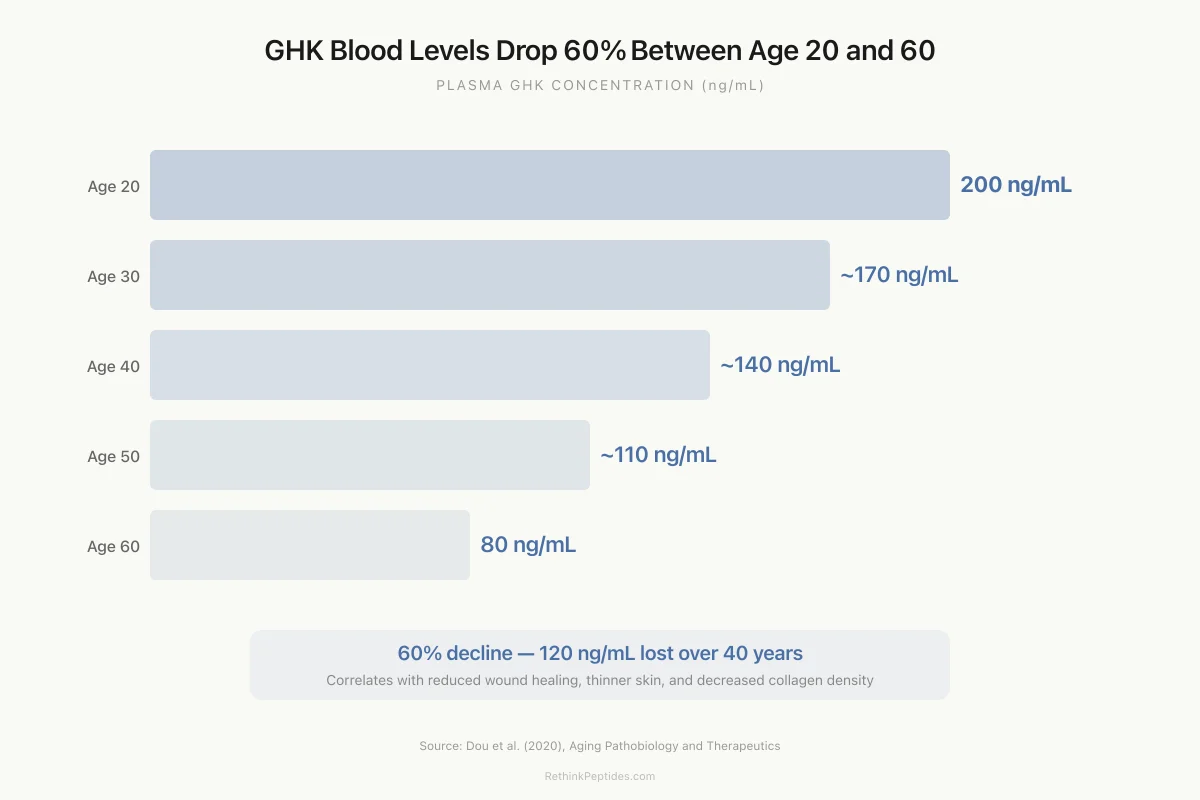
GHK-Cu levels in human blood plasma decline from approximately 200 ng/mL at age 20 to 80 ng/mL by age 60, a 60% reduction that correlates with declining wound healing capacity and skin regeneration.
Dou et al., Journal of Aging Research, 2020
GHK-Cu
glycyl-L-histidyl-L-lysine copper complex
4,000+
genes regulated by GHK in genome-wide studies
3 amino acids
tripeptide naturally found in human plasma
Dou et al., Journal of Aging Research, 2020
If you only read one thing
Copper peptides — specifically GHK-Cu — are one of the few skincare ingredients that actually stimulate your skin to rebuild itself rather than just sitting on the surface. In small human trials, they improved skin firmness by 22% and boosted collagen density by 28% over 12 weeks. The catch: your skin doesn't absorb them very well from a regular serum, the clinical trials are small and short, and nobody has compared them head-to-head with retinoids (which have decades more evidence). Promising, but the marketing is way ahead of the proof.
GHK-Cu (glycyl-L-histidyl-L-lysine copper complex) is a naturally occurring tripeptide found in human blood plasma, saliva, and urine. First isolated from human albumin in the 1970s by Loren Pickart, this three-amino-acid peptide forms a high-affinity chelate with copper(II) ions. The resulting complex stimulates collagen synthesis, accelerates wound healing, promotes skin remodeling, and exerts antioxidant and anti-inflammatory effects across multiple tissue types.[1]
What makes GHK-Cu unusual among skincare peptides is the breadth of its documented biological activity. It does not simply moisturize or temporarily plump skin. It activates tissue remodeling programs that include both synthesis and controlled breakdown of extracellular matrix components, a balanced process essential for maintaining healthy skin architecture rather than producing scar tissue. Genome-wide studies have identified over 4,000 genes whose expression is modulated by GHK, spanning pathways involved in wound healing, antioxidant defense, stem cell activation, and DNA repair.[2]
Key Takeaways
- Your body's natural copper peptide levels drop by about 60% between age 20 and 60.
- Small trials showed 22% firmer skin and 28% more collagen density after 12 weeks of daily use.
- Copper peptides both build new collagen and break down damaged collagen — most skincare only does one.
- One tripeptide appears to flip the expression of over 4,000 different human genes.
- It's basically a tiny copper taxi, delivering the mineral your cells need to stitch collagen back together.
- No trial has ever compared copper peptides head-to-head with retinoids, which have decades more proof.
- Most of what you apply never reaches your living skin cells — skin penetration is still the big problem.
Fact Check
The serum marketing vs. the clinical data
The claim
“Copper peptides are the ultimate anti-aging ingredient — they rebuild your skin, erase wrinkles, and reverse years of damage”
Skincare influencers, product marketing, and extrapolation from lab studies
What research shows
OverstatedSmall human trials (13–71 participants, 12 weeks max) show real but modest improvements — 22% firmer skin, 28% more collagen density. No trial has compared GHK-Cu head-to-head with retinoids, and most studies lack proper placebo controls.
The lab and animal data are genuinely impressive — GHK-Cu does things most skincare ingredients can't. But 'stimulates collagen in a petri dish' and 'visibly reverses aging on your face' are very different claims. The delivery problem alone means most of what you apply never reaches the cells that need it.
Aggregate assessment of GHK-Cu clinical trial literature
What GHK-Cu Is
GHK (glycyl-L-histidyl-L-lysine) is a tripeptide consisting of three amino acids: glycine, histidine, and lysine. The histidine and lysine residues create a binding site with very high affinity for copper(II) ions, forming the GHK-Cu complex. This copper binding is not incidental; it is central to the peptide's biological activity. Copper is a cofactor for lysyl oxidase (the enzyme that cross-links collagen and elastin), superoxide dismutase (a primary antioxidant enzyme), and cytochrome c oxidase (a mitochondrial respiratory enzyme). GHK-Cu may function in part as a copper delivery vehicle, providing bioavailable copper to cells at sites of tissue damage.[3]
GHK was originally isolated from human plasma albumin. It is present in blood at concentrations that vary with age: approximately 200 ng/mL at age 20, declining to roughly 80 ng/mL by age 60. This 60% reduction parallels age-related declines in wound healing rate, skin elasticity, and tissue regenerative capacity. Whether the decline in GHK levels causes or merely correlates with reduced regeneration is not definitively established, but the temporal relationship is consistent with a functional role.[2]
Age-Related Decline
GHK Blood Levels Drop 60% Between Age 20 and 60
Plasma GHK concentration (ng/mL) across the adult lifespan
60%
decline from age 20 to 60
120 ng/mL
lost over 40 years
Source: Dou et al. (2020), Aging Pathobiology and Therapeutics
 View as image ↗
How GHK-Cu Affects Skin
GHK-Cu's effects on skin are mediated through multiple overlapping mechanisms, distinguishing it from single-target skincare ingredients.
Collagen and Extracellular Matrix
GHK-Cu stimulates synthesis of type I collagen, the primary structural protein of the dermis. It also increases production of elastin (which provides skin elasticity), decorin (a small proteoglycan that regulates collagen fibril assembly), and glycosaminoglycans including dermatan sulfate and chondroitin sulfate. Together, these components constitute the extracellular matrix (ECM) that determines skin's mechanical properties, hydration, and appearance.[1]
What makes GHK-Cu's ECM effects distinctive is their bidirectional nature. The peptide stimulates both synthesis and controlled breakdown of matrix components. It modulates the activity of matrix metalloproteinases (MMPs, enzymes that degrade ECM proteins) and their tissue inhibitors (TIMPs). This balanced regulation is essential for tissue remodeling: pure synthesis without breakdown produces fibrosis (scarring), while excessive breakdown without synthesis produces tissue degradation. GHK-Cu appears to push the system toward organized remodeling rather than either extreme. For a detailed look at the molecular pathway, see How Copper Peptides Stimulate Collagen: Mechanism Explained.
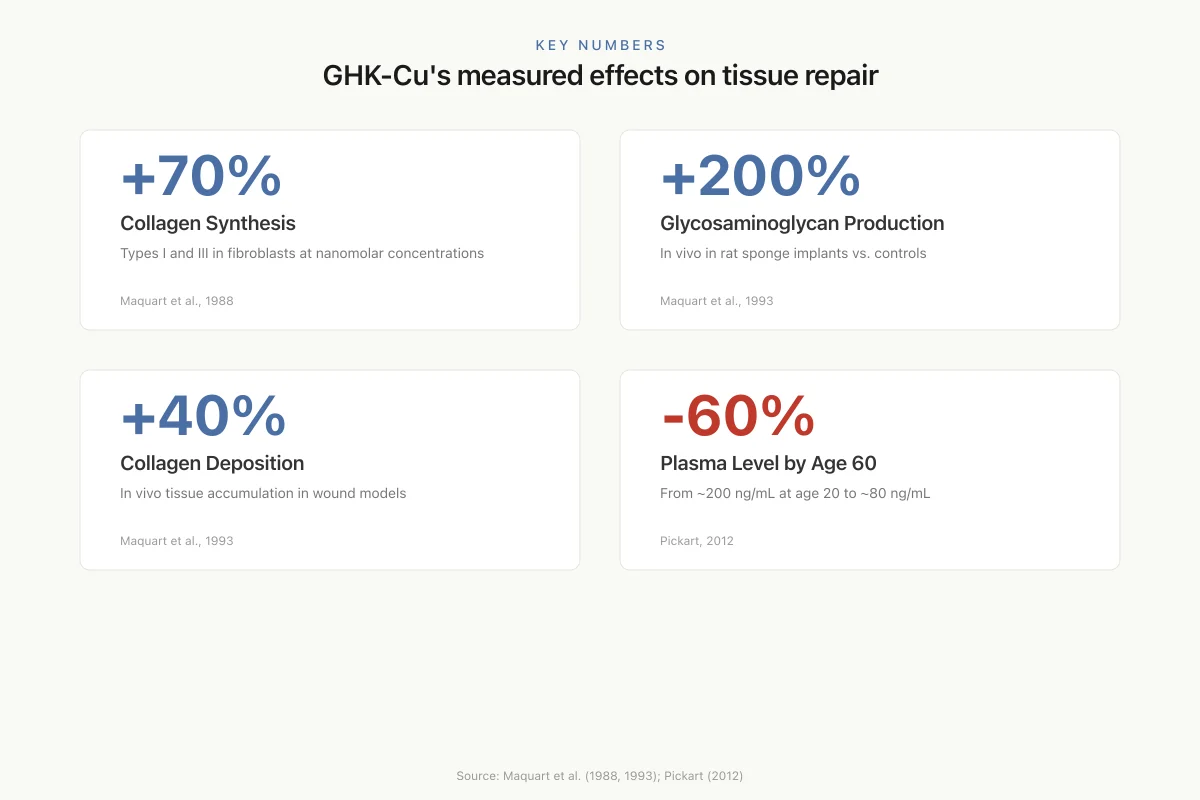
Key Numbers
GHK-Cu's measured effects on tissue repair
+70%
Collagen Synthesis
Types I and III in fibroblasts at nanomolar concentrations
Maquart et al., 1988
+200%
Glycosaminoglycan Production
In vivo in rat sponge implants vs. controls
Maquart et al., 1993
+40%
Collagen Deposition
In vivo tissue accumulation in wound models
Maquart et al., 1993
−60%
Plasma Level by Age 60
From ~200 ng/mL at age 20 to ~80 ng/mL
Pickart, 2012
Source: Maquart et al. (1988, 1993); Pickart (2012)
 View as image ↗
Antioxidant Defense
GHK-Cu has demonstrated potent antioxidant effects. It modulates the expression of antioxidant enzymes including superoxide dismutase (SOD) and glutathione-related enzymes, reducing oxidative damage to DNA, lipids, and proteins. In a fibrosis model, Ma and colleagues showed that GHK-Cu protected against bleomycin-induced pulmonary fibrosis through anti-oxidative stress and anti-inflammation pathways, demonstrating that the antioxidant effects extend beyond skin to systemic tissue protection.[6]
This is relevant to skincare because UV exposure (photoaging) generates reactive oxygen species that damage dermal collagen and accelerate skin aging. Chronic UV exposure degrades both collagen fibers and the proteoglycan ground substance of the dermis, producing the leathery texture and deep wrinkles characteristic of photodamaged skin. An ingredient that both stimulates new collagen production and protects existing collagen from oxidative damage addresses both sides of the photoaging equation.
The antioxidant mechanism involves copper's role as a cofactor in superoxide dismutase (SOD), one of the body's primary enzymatic defenses against superoxide radicals. SOD converts superoxide (a highly reactive oxygen species) into hydrogen peroxide, which is then further detoxified by catalase and glutathione peroxidase. By providing bioavailable copper to cells, GHK-Cu may support SOD activity at the cellular level. Additionally, GHK-Cu has been shown to increase levels of reduced glutathione (GSH) and ascorbic acid in wound tissue, supporting non-enzymatic antioxidant defenses alongside the enzymatic pathway.
The anti-inflammatory effects of GHK-Cu appear to operate through suppression of pro-inflammatory cytokines including TNF-alpha and IL-6, while maintaining the regulated inflammatory response needed for tissue repair. This distinguishes GHK-Cu from pure anti-inflammatories: it does not suppress inflammation entirely (which would impair healing) but modulates it toward a resolution-oriented profile. For more on copper peptides' free radical protection, see Copper Peptides as Antioxidants: Free Radical Protection in Skin.
Gene Expression: The Broad Biological Footprint
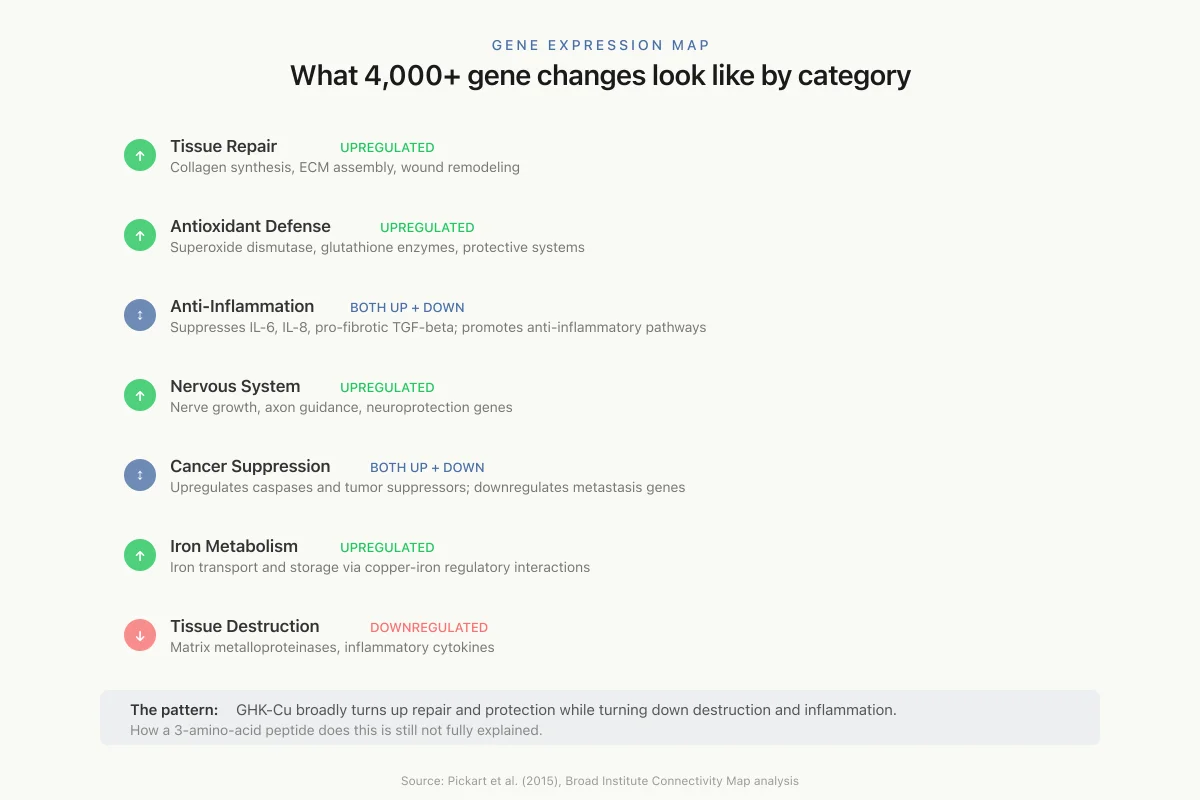
The most surprising aspect of GHK-Cu biology emerged from genome-wide expression studies. Pickart and colleagues identified over 4,000 human genes whose expression is modulated by GHK at physiological concentrations. The affected genes span multiple functional categories: DNA repair (upregulation of multiple DNA damage response genes), antioxidant defense, stem cell markers, ubiquitin-proteasome pathway components, and multiple growth factors including TGF-beta and VEGF.[4]
This genomic breadth raised the question of how a simple tripeptide could influence so many pathways. The proposed mechanism involves copper-dependent activation of transcription factor networks rather than a single receptor-ligand interaction. GHK-Cu may function as a master regulator that resets cellular gene expression patterns toward a more youthful, regenerative profile. This is a hypothesis, not a confirmed mechanism, and skeptics reasonably note that genome-wide studies can overestimate functional effects by counting statistical associations rather than biologically meaningful changes.
Gene Expression Map
What 4,000+ gene changes look like by category
Tissue Repair
upregulatedCollagen synthesis, ECM assembly, wound remodeling
Antioxidant Defense
upregulatedSuperoxide dismutase, glutathione enzymes, protective systems
Anti-Inflammation
bothSuppresses IL-6, IL-8, pro-fibrotic TGF-beta; promotes anti-inflammatory pathways
Nervous System
upregulatedNerve growth, axon guidance, neuroprotection genes
Cancer Suppression
bothUpregulates caspases and tumor suppressors; downregulates metastasis genes
Iron Metabolism
upregulatedIron transport and storage via copper-iron regulatory interactions
Tissue Destruction
downregulatedMatrix metalloproteinases, inflammatory cytokines
The pattern: GHK-Cu broadly turns up repair and protection genes while turning down destruction and inflammation genes. How a 3-amino-acid peptide does this is still not fully explained.
Source: Pickart et al. (2015), Broad Institute Connectivity Map analysis
 View as image ↗
Clinical Evidence for Skincare Effects
Anti-Wrinkle and Skin Density Studies
Multiple clinical studies have evaluated GHK-Cu's effects on aging skin:
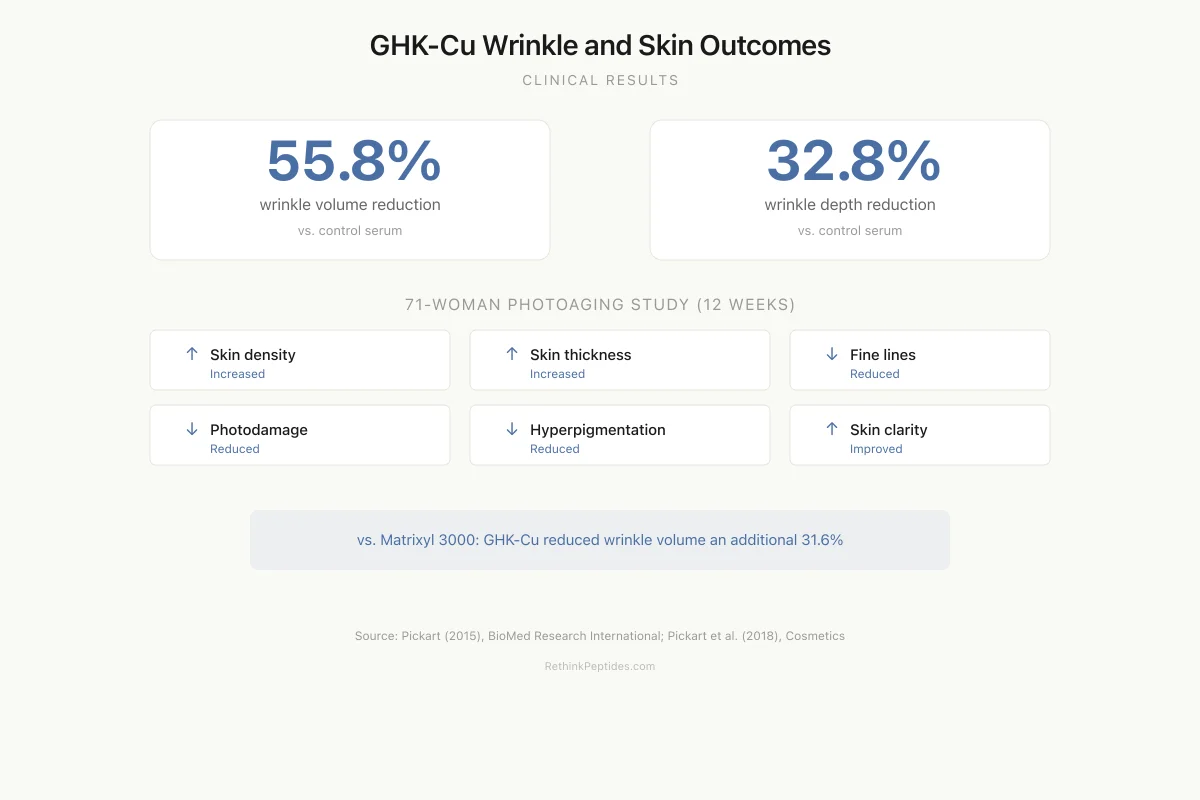
A facial cream containing GHK-Cu was tested in 71 women with mild to advanced photoaging in a 12-week application study. Treated skin showed improved laxity, clarity, and appearance, with reduced fine lines and wrinkle depth, and increased skin density and thickness. While positive, this study lacked a randomized placebo-controlled design.
In a double-blind, split-face study of 60 women aged 40-65, a 0.05% GHK-Cu serum applied twice daily for 12 weeks produced a 22% increase in skin firmness and a 16% reduction in fine lines compared to placebo, measured by optical profilometry.
A separate IRB-approved trial of 21 women volunteers showed an average 28% increase in collagen density after 3 months of daily application, with the top quartile experiencing 51% increase. This study used non-invasive collagen density measurement (optical profilometry), not biopsy.
GHK-Cu has also been compared to other cosmeceutical peptides. In one trial, GHK-Cu produced a 31.6% reduction in wrinkle volume compared to Matrixyl 3000 (palmitoyl pentapeptide-4), and a 55.8% reduction compared to control serum. For a comparison with another popular anti-wrinkle peptide, see Argireline (Acetyl Hexapeptide-3): The "Botox in a Bottle" Peptide.
Clinical Results
GHK-Cu Wrinkle and Skin Outcomes
Measured wrinkle reductions
55.8%
wrinkle volume reduction
vs. control serum
32.8%
wrinkle depth reduction
vs. control serum
71-woman photoaging study (12 weeks)
Skin density
Increased
Skin thickness
Increased
Fine lines
Reduced
Photodamage
Reduced
Hyperpigmentation
Reduced
Skin clarity
Improved
Source: Pickart (2015), BioMed Res Int; Pickart et al. (2018), Cosmetics
 View as image ↗
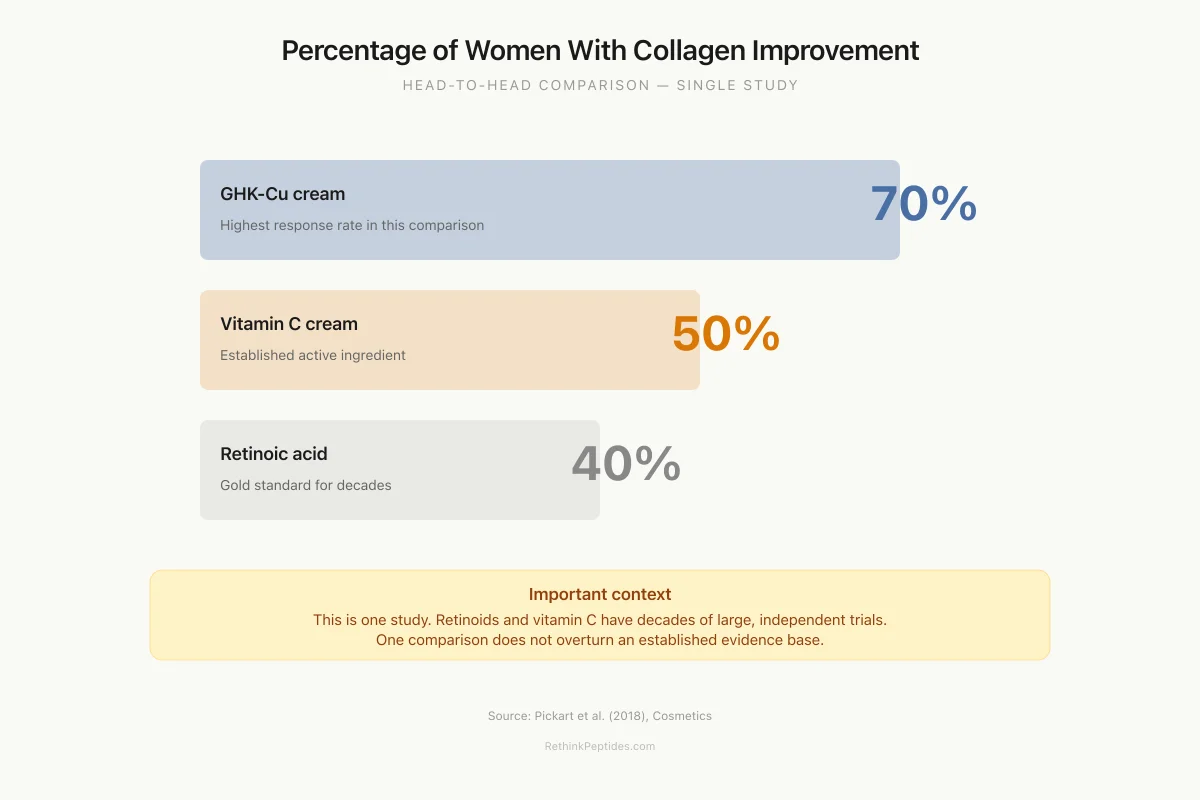
Head-to-Head Results
Percentage of Women With Collagen Improvement
One comparative study — not yet independently replicated
Important context: This is a single study. Retinoids and vitamin C have decades of independent evidence from large trials. GHK-Cu does not. One comparison does not overturn an established evidence base.
Source: Pickart et al. (2018), Cosmetics
 View as image ↗
Miller et al. (2006) · Archives of Facial Plastic Surgery
- Population
- 13 patients after CO₂ laser resurfacing
- Intervention
- GHK-Cu skin care products applied during recovery
- Comparator
- Standard post-procedure skin care
- Finding
- No objective difference in erythema resolution or wrinkle improvement, but patient satisfaction was significantly higher in the GHK-Cu group (p=0.04)
mixed Patients felt better about their results, but objective measurements couldn't tell the groups apart — the study was likely too small to detect real differences
Miller et al. (2006), Archives of Facial Plastic Surgery
Post-Procedure Recovery
Miller and colleagues evaluated GHK-Cu skin care products following CO2 laser resurfacing in a randomized study of 13 patients. Objective evaluation found no significant difference in erythema resolution or wrinkle improvement between GHK-Cu and control groups. However, patient satisfaction was significantly higher in the GHK-Cu group (p=0.04). The study was small and may have been underpowered to detect objective differences, but the disconnect between objective measures and patient-reported outcomes is worth noting.[7]
Wound Healing
GHK-Cu's wound healing effects have stronger evidence in preclinical models than in skincare applications. In animal studies, GHK-Cu accelerated wound contraction, increased granulation tissue formation, stimulated angiogenesis (new blood vessel growth), and increased antioxidant enzyme activity at wound sites. A 2025 comprehensive review of tripeptides in wound healing and skin regeneration confirmed GHK-Cu's role as a multi-functional wound healing peptide, acting through fibroblast activation, collagen deposition, and vascular growth factor stimulation.[8]
Arul and colleagues demonstrated that a collagenous matrix incorporating biotinylated GHK peptide enhanced dermal wound healing in animal models, showing increased collagen deposition, fibroblast proliferation, and epithelialization compared to matrices without GHK. This work established that GHK could be incorporated into biomaterial scaffolds for wound management applications.[9]
The wound healing applications of GHK-Cu extend beyond cosmetic use. The peptide's ability to stimulate angiogenesis (new blood vessel formation) is relevant to chronic wound management, where inadequate blood supply is a primary barrier to healing. In diabetic wound models, GHK-Cu-containing dressings showed accelerated closure and reduced inflammation compared to controls. This suggests potential applications in medical wound care that go beyond the skincare applications most consumers associate with copper peptides, though no copper peptide wound product has completed regulatory approval for clinical wound management.
- Cell & Lab Studiescompleted
Strong data: GHK-Cu stimulates collagen, elastin, and glycosaminoglycan synthesis in human fibroblasts and modulates 4,000+ genes
- Animal Studiescompleted
Multiple wound healing models show accelerated closure, increased collagen deposition, and angiogenesis
- Case Reportscompleted
Post-procedure recovery reports and observational skincare outcomes
- Small Human Trialscurrent
3 trials (13–71 participants, 12 weeks): 22% firmness gain, 28% collagen density increase, wrinkle reduction vs. controls
- Large Randomized Trialmissing
- Meta-Analysismissing
GHK-Cu has strong preclinical evidence across cell culture and animal models. Human clinical trials exist but are small (13–71 participants), short (12 weeks max), and some lack proper controls. No large randomized controlled trial or head-to-head comparison with retinoids has been conducted.
Aggregate assessment of published GHK-Cu literature
The Delivery Problem
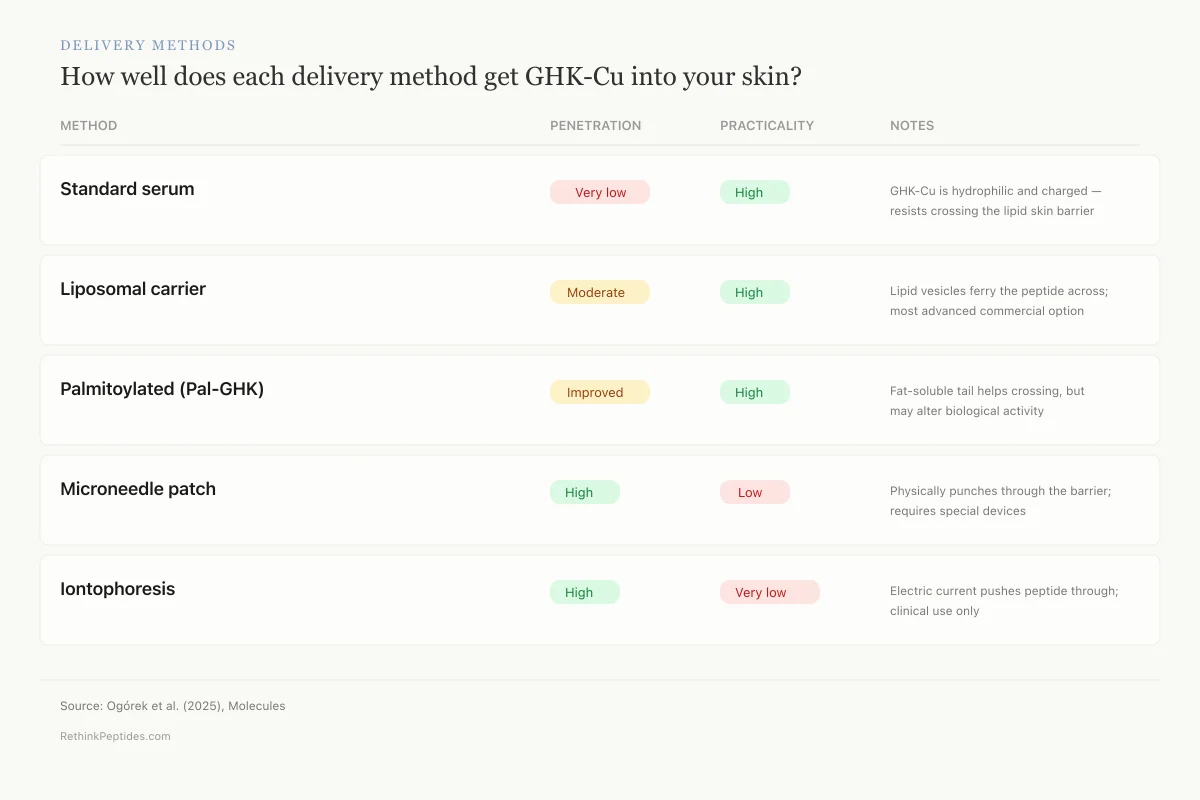
GHK-Cu is a hydrophilic tripeptide with a molecular weight of approximately 404 Da (with copper). While this is below the traditional 500 Da cutoff sometimes cited for skin penetration, GHK-Cu's charged nature at physiological pH reduces its passive diffusion through the lipophilic stratum corneum. This creates a fundamental formulation challenge: the peptide needs to penetrate skin to reach dermal fibroblasts, but its physicochemical properties resist passive absorption.
Several delivery strategies have been investigated:
Liposomal encapsulation. GHK-Cu has been encapsulated in liposomes and nano-lipid carriers to improve skin penetration. Ogorek and colleagues assessed whether current analytical methods are adequate for measuring skin permeation of GHK-Cu from liposomal formulations, highlighting that even the measurement of penetration remains technically challenging.[5]
Microneedle delivery. Physical disruption of the stratum corneum using microneedle arrays has been shown to significantly increase GHK-Cu delivery to the dermis. This approach bypasses the penetration barrier entirely but requires specialized application devices.
Palmitoylation. Adding a lipophilic palmitoyl group to GHK (creating palmitoyl tripeptide-1 or Pal-GHK) increases its lipophilicity and skin penetration. Many commercial "copper peptide" serums use palmitoylated variants rather than native GHK-Cu. Whether the palmitoylated form retains equivalent biological activity after penetration and de-palmitoylation is not fully established.
Iontophoresis. Electrically driven delivery can push charged peptides through the skin barrier. This is used in clinical settings but is impractical for daily consumer skincare use.
The delivery challenge means that the concentration of GHK-Cu stated on a product label does not directly predict the amount reaching target cells. A 1% GHK-Cu serum with poor penetration may deliver less active peptide to the dermis than a 0.1% formulation in an optimized liposomal vehicle.
Delivery Methods
How well does each delivery method actually get GHK-Cu into your skin?
GHK-Cu is hydrophilic and charged — it resists crossing the lipid skin barrier
Lipid vesicles ferry the peptide across the barrier; most advanced commercial option
Adding a fat-soluble tail helps crossing, but may alter biological activity
Physically punches through the barrier — effective but requires special devices
Electric current pushes charged peptide through skin — clinical use only
Source: Ogórek et al. (2025), Molecules
 View as image ↗
Copper Peptides Beyond GHK-Cu
GHK-Cu is the most studied copper peptide, but it is not the only one relevant to skincare. AHK-Cu (alanyl-histidyl-lysine copper complex) has been investigated specifically for hair follicle effects and is being studied for potential hair growth applications. See AHK-Cu: The Copper Tripeptide Being Studied for Hair Growth for details.
Other copper-binding peptides with skincare relevance include copper-GHK variants with modified amino acid sequences designed for improved stability or penetration, and copper-peptide complexes derived from food proteins. The copper ion itself provides antimicrobial activity (relevant to acne-prone skin) and cofactor function for collagen cross-linking enzymes, so any effective copper delivery system has potential dermatological applications.
What the Evidence Supports and What It Does Not
The GHK-Cu evidence base has clear strengths and clear gaps.
Well-supported claims:
- GHK-Cu stimulates collagen, elastin, and glycosaminoglycan synthesis in cell culture
- GHK-Cu accelerates wound healing in animal models
- GHK-Cu modulates expression of thousands of genes involved in tissue repair and antioxidant defense
- Topical GHK-Cu produces measurable improvements in skin firmness, wrinkle depth, and collagen density in clinical studies
Claims that need more evidence:
- Optimal concentration for topical formulations (most studies used different concentrations)
- Whether palmitoylated variants deliver equivalent in vivo effects to native GHK-Cu
- Long-term safety data for daily topical use beyond 12 weeks
- How GHK-Cu compares head-to-head with retinoids, the gold standard for anti-aging skincare
- Whether GHK-Cu's gene expression effects measured in vitro translate to meaningful changes when applied topically
Claims without current support:
- Systemic anti-aging effects from topical application
- Cancer prevention (despite anti-DNA-damage gene upregulation in cell culture)
- Hair regrowth from GHK-Cu specifically (AHK-Cu is the variant studied for hair)
The clinical trials are generally small, short-term, and sometimes lack proper controls. The in vitro and animal data are substantially stronger than the human clinical data. This is not unusual for cosmeceutical ingredients, but it means the skincare marketing around copper peptides often runs ahead of the clinical evidence.
Safety and Tolerability
GHK-Cu has a favorable safety profile in published studies. No serious adverse events have been reported in clinical trials of topical GHK-Cu formulations at concentrations up to 1%. The peptide is naturally present in human tissue, which reduces the likelihood of allergic sensitization compared to synthetic molecules not found in the body.
The primary tolerability concerns are:
Skin irritation. Some users report mild redness or tingling when first using copper peptide products, particularly at higher concentrations. This typically resolves within the first week of use and may relate to the copper ion itself, which can be mildly oxidizing at the skin surface. Products formulated at acidic pH (below 4) may increase irritation.
Interaction with vitamin C. Copper ions can catalyze the oxidation of ascorbic acid (vitamin C), potentially reducing the efficacy of vitamin C serums and generating free radicals in the process. This is the primary reason dermatologists advise separating copper peptide and vitamin C products in a skincare routine, either by using them at different times of day or on alternating days.
Safety
ModerateDon't layer copper peptides with vitamin C
Concern
Copper ions speed up the breakdown of ascorbic acid (vitamin C), which can generate free radicals — the exact opposite of what both products are supposed to do. Using them together may cancel out the benefits of your vitamin C serum and potentially increase oxidative stress on the skin surface.
What the research says
Use copper peptide products and vitamin C serums at different times of day (e.g., vitamin C in the morning, copper peptides at night), or alternate days. Also avoid layering copper peptides with strong AHAs or BHAs, which can destabilize the peptide-copper bond.
Particularly relevant for: Anyone using both copper peptide and vitamin C products
What to do
Separate copper peptide and vitamin C application by at least 12 hours. Apply copper peptides on non-exfoliation days or after skin pH has normalized.
Dermatological consensus on copper-ascorbic acid redox interaction
Interaction with exfoliating acids. Strong AHAs and BHAs at low pH can destabilize the GHK-Cu complex, releasing free copper ions that may cause irritation without the tissue-remodeling benefits of the intact peptide complex. Using copper peptides on non-exfoliation days or after allowing pH to normalize is generally recommended.
No published teratogenicity or systemic toxicity data. Because GHK-Cu is used topically at low concentrations, systemic absorption is minimal and no systemic toxicity studies have been published for cosmetic-grade products. The peptide's presence in normal human plasma suggests low intrinsic toxicity, but formal safety studies for cosmetic use are limited.
GHK-Cu in the Broader Skincare Peptide Landscape
The skincare industry uses multiple peptide classes, each with different mechanisms:
| Peptide | Mechanism | Primary Claim |
|---|---|---|
| GHK-Cu (copper peptide) | Collagen/ECM stimulation + copper delivery | Skin remodeling, wound healing |
| Argireline (acetyl hexapeptide-3) | Neuromuscular junction inhibition | Wrinkle relaxation ("Botox alternative") |
| Matrixyl (palmitoyl pentapeptide-4) | ECM stimulation via TGF-beta | Collagen production |
| EGF (epidermal growth factor) | EGF receptor activation | Cell proliferation |
| Collagen peptides (hydrolyzed) | Fibroblast stimulation via Pro-Hyp | Hydration, elasticity |
GHK-Cu is distinguished by three features: it is naturally occurring in human tissue, it carries a functional metal ion, and its biological effects extend beyond single-pathway stimulation to genome-wide gene expression modulation. These distinctions do not make it "better" than other peptides; they make it mechanistically different. Whether that difference translates to superior clinical outcomes has not been tested in head-to-head comparison trials.
The collagen-related benefits of copper peptides may complement the effects of oral collagen peptide supplementation. Topical GHK-Cu acts directly on dermal fibroblasts from outside, while ingested collagen peptides provide hydroxyproline-containing building blocks from inside. See Collagen Peptides for Bone Density: The Emerging Research for the oral collagen evidence.
Research Gaps
What would it take?
What would it take to prove copper peptides are a top-tier anti-aging ingredient?
Large randomized controlled trial (200+ participants, 6+ months)
Largest trial to date had 71 participants for only 12 weeks
Head-to-head comparison with tretinoin (the gold standard)
No published trial has directly compared GHK-Cu vs. retinoids
Standardized concentration and delivery vehicle across studies
Every trial used different formulations, making comparisons difficult
Skin biopsy data confirming collagen changes (not just surface measurements)
Current trials use optical profilometry, not tissue biopsy
Long-term safety data beyond 12 weeks of daily use
Assessment based on current GHK-Cu clinical trial landscape
The Bottom Line
GHK-Cu is a naturally occurring copper-binding tripeptide that declines with age and has demonstrated collagen-stimulating, wound-healing, antioxidant, and tissue-remodeling effects across multiple experimental systems. Clinical studies show measurable improvements in skin firmness, wrinkle depth, and collagen density after 12 weeks of topical application. The preclinical evidence base (cell culture and animal models) is substantially stronger than the human clinical evidence (small trials, short durations). Delivery through the skin barrier remains a formulation challenge, with liposomal encapsulation and palmitoylation as the primary solutions.
Frequently Asked Questions
Sources & References
- 1RPEP-02768·Pickart, Loren et al. (2015). “GHK Peptide as a Natural Modulator of Multiple Cellular Pathways in Skin Regeneration..” BioMed research international.Study breakdown →PubMed →↩
- 2RPEP-04782·Dou, Yan et al. (2020). “The potential of GHK as an anti-aging peptide..” Aging pathobiology and therapeutics.Study breakdown →PubMed →↩
- 3RPEP-01402·Pickart, Loren (2008). “GHK-Cu: The Complete Review of This Tissue Remodeling Tripeptide's Biology and Applications.” Journal of biomaterials science. Polymer edition.Study breakdown →PubMed →↩
- 4RPEP-02037·Pickart, Loren et al. (2012). “The human tripeptide GHK-Cu in prevention of oxidative stress and degenerative conditions of aging: implications for cognitive health..” Oxidative medicine and cellular longevity.Study breakdown →PubMed →↩
- 5RPEP-12847·Ogórek, Karolina et al. (2025). “Can Liposomes Help the Anti-Aging Peptide GHK-Cu Penetrate Skin? Review Reveals a Major Research Gap.” Molecules (Basel.Study breakdown →PubMed →↩
- 6RPEP-04979·Ma, Wen-Hui et al. (2020). “GHK-Cu Peptide Reduces Lung Fibrosis and Inflammation in Mice by Blocking TGF-β Scarring Pathway.” Life sciences.Study breakdown →PubMed →↩
- 7RPEP-01165·Miller, Timothy R et al. (2006). “Copper Peptide GHK-Cu Cream Improves Healing After Laser Skin Resurfacing in Humans.” Archives of facial plastic surgery.Study breakdown →PubMed →↩
- 8RPEP-09771·Adnan, Siti Balqis et al. (2025). “Tripeptides for Wound Healing and Skin Regeneration: A Comprehensive Review.” International journal of medical sciences.Study breakdown →PubMed →↩
- 9RPEP-01007·Arul, V et al. (2005). “GHK Peptide in a Collagen Scaffold Accelerates Wound Healing in Rats.” Journal of biomedical materials research. Part B.Study breakdown →PubMed →↩